

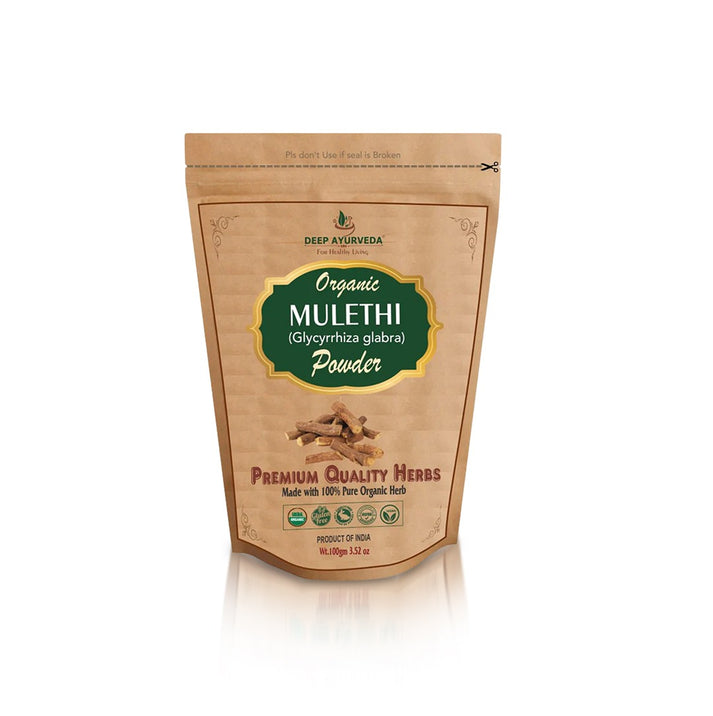
Deep Ayurveda Glycyrrhiza glabra Powder
✅ May support digestive comfort ✅ Soothes the throat ✅ Supports respiratory health ✅ May support skin health | Lab-Tested
Introduction
If you've explored herbal remedies for digestive health, sore throat relief, or traditional Ayurvedic wellness, you've probably come across Glycyrrhiza glabra, better known as Licorice Root. Although this herb has been used for thousands of years across Ayurveda, Traditional Chinese Medicine, and Western herbal practice, it remains one of the most misunderstood medicinal plants today.
Many people assume licorice root is simply a natural sweetener or a flavouring used in confectionery. In reality, Glycyrrhiza glabra contains naturally occurring bioactive compounds that have been extensively studied for their potential role in digestive comfort, respiratory support, and general wellbeing. At the same time, it is also a herb that deserves careful use, as excessive intake or prolonged use may not be suitable for everyone.
Across Australia, interest in herbal and integrative healthcare continues to grow. More Australians are looking for evidence-informed natural approaches that complement a healthy lifestyle. This makes it even more important to understand what the current research says, how traditional systems such as Ayurveda have historically used licorice root, and where caution is needed.
In Ayurvedic practice, Glycyrrhiza glabra is known as Yashtimadhu. Rather than being viewed as a one-size-fits-all remedy, it is traditionally selected after considering an individual's constitution, digestive health, lifestyle, and overall balance. Modern research has also explored several of its naturally occurring compounds, although evidence varies depending on the specific health condition being studied.
This guide combines traditional Ayurvedic knowledge with current scientific understanding to help Australian readers make informed decisions. Throughout the article, we'll clearly distinguish between traditional use and evidence from modern research so you can better understand where the strongest evidence exists.
In this guide, you'll learn:
- What Glycyrrhiza glabra is and how it differs from liquorice confectionery.
- The traditional Ayurvedic uses of Yashtimadhu.
- Potential health benefits supported by scientific research.
- Recommended dosage and available forms.
- Possible side effects and drug interactions.
- Who should avoid licorice root.
- How to choose a quality licorice supplement in Australia.
- Frequently asked questions based on common Australian searches.
Important: This article is for educational purposes only and should not replace personalised medical advice. Always consult a qualified healthcare professional before starting any herbal supplement, particularly if you have high blood pressure, kidney disease, heart conditions, or take prescription medications.
What is Glycyrrhiza glabra?
Glycyrrhiza glabra is a perennial medicinal herb belonging to the Fabaceae (legume) family. Commonly known as Licorice Root, it has been traditionally used for centuries to support digestive comfort, soothe the respiratory tract, and promote general wellbeing. In Ayurveda, it is called Yashtimadhu and is valued for its naturally sweet taste and balancing properties.
The name Glycyrrhiza comes from the Greek words glykys (sweet) and rhiza (root), reflecting its naturally sweet flavour. In fact, one of its key compounds—glycyrrhizin—is considerably sweeter than table sugar, although its medicinal role extends far beyond taste.
Native to parts of Europe, Western Asia, and the Mediterranean region, Glycyrrhiza glabra is now cultivated in several countries to meet the growing demand for herbal supplements and botanical extracts. The dried roots are commonly processed into powders, teas, capsules, liquid extracts, and specialised preparations such as Deglycyrrhizinated Licorice (DGL).
Unlike liquorice-flavoured confectionery, medicinal licorice root is used for its naturally occurring plant compounds rather than as a sweet ingredient. Many commercially available sweets contain artificial flavourings and should not be confused with traditional herbal preparations.
The root contains a wide range of naturally occurring constituents, including:
- Glycyrrhizin
- Liquiritin
- Glabridin
- Flavonoids
- Isoflavonoids
- Chalcones
- Polysaccharides
- Coumarins
Researchers continue to investigate how these compounds may contribute to the herb's biological activity. While laboratory and early clinical studies are encouraging in some areas, more high-quality human research is still needed for many proposed health benefits.
Glycyrrhiza glabra in Ayurveda
In Ayurveda, Glycyrrhiza glabra is known as Yashtimadhu, a herb traditionally described as nourishing, soothing, and supportive of overall vitality. It has long been incorporated into classical formulations for digestive comfort, respiratory wellness, and maintaining balance within the body.
Ayurvedic practitioners typically do not recommend Yashtimadhu based on a single symptom alone. Instead, they consider factors such as the individual's constitution (Prakriti), current imbalance (Vikriti), digestion (Agni), and overall health before recommending herbal support. This personalised approach is one of the distinguishing features of Ayurvedic practice.
At Deep Ayurveda Australia, herbal recommendations are generally made as part of a broader assessment rather than relying on one herb in isolation. Lifestyle, diet, sleep, and other factors are also considered when developing an individualised wellness plan.
Quick Facts About Glycyrrhiza glabra
| Feature | Details |
|---|---|
| Botanical Name | Glycyrrhiza glabra |
| Common Name | Licorice Root / Liquorice Root |
| Ayurvedic Name | Yashtimadhu |
| Plant Family | Fabaceae |
| Part Used | Root |
| Primary Active Compound | Glycyrrhizin |
| Traditional Systems | Ayurveda, Traditional Chinese Medicine, Western Herbal Medicine |
| Available Forms | Capsules, Powder, Tea, Liquid Extract, DGL Tablets |
| Taste | Naturally Sweet |
| Suitable For | Digestive support, respiratory wellness, traditional herbal use (depending on individual circumstances) |
Why Is Glycyrrhiza glabra So Popular Today?
Interest in licorice root has increased as more people seek complementary approaches to digestive health and overall wellbeing. Unlike many herbal ingredients that have only recently gained attention, Glycyrrhiza glabra has a long history of traditional use alongside a growing body of scientific investigation.
Several factors contribute to its popularity:
- Long-standing use in traditional herbal systems across different cultures.
- Availability in a variety of supplement forms.
- Ongoing research into its naturally occurring plant compounds.
- Growing consumer interest in plant-based wellness.
- Inclusion in both traditional Ayurvedic formulations and modern herbal products.
However, popularity should not be mistaken for universal suitability. Licorice root is one of the herbal ingredients where understanding dosage, duration of use, and individual health circumstances is particularly important.
Top Health Benefits of Glycyrrhiza glabra (Licorice Root)
Glycyrrhiza glabra has traditionally been used to support digestive comfort, soothe the throat, promote respiratory wellbeing, and maintain overall vitality. Modern research has explored its anti-inflammatory, antioxidant, and mucosal-protective properties, although the strength of evidence varies depending on the health condition. It should be used responsibly and under professional guidance where appropriate.
One of the reasons Glycyrrhiza glabra (Licorice Root) has remained an important medicinal herb for thousands of years is its versatility. From ancient Ayurvedic texts to modern laboratory research, the herb continues to attract attention for its diverse range of naturally occurring compounds.
However, it's important to understand that not every traditional use has the same level of scientific evidence. Some applications are supported by human clinical studies, while others are primarily based on traditional practice, laboratory research, or animal studies.
1. May Support Digestive Health
Licorice root has traditionally been used to soothe the digestive tract and support stomach comfort. Modern research suggests certain compounds may help protect the stomach lining and support mucosal health, but more high-quality human studies are needed.
Digestive discomfort is one of the most common reasons people consider Glycyrrhiza glabra. In Ayurveda, Yashtimadhu has long been valued for its soothing nature and is traditionally used to support healthy digestion and maintain balance within the gastrointestinal tract.
Unlike herbs that stimulate digestion by increasing digestive heat, licorice root is traditionally regarded as a gentle, nourishing herb that helps calm irritated tissues.
Modern scientific interest centres on glycyrrhizin and flavonoids, which have demonstrated anti-inflammatory and antioxidant properties in laboratory and preclinical studies. Researchers have also investigated their potential role in supporting the protective mucus layer of the stomach.
Traditional Ayurvedic Perspective
According to Ayurveda, Yashtimadhu is traditionally used to:
- Support healthy digestion.
- Soothe the gastrointestinal tract.
- Promote balanced digestive function.
- Help maintain healthy stomach tissues.
Rather than being prescribed for every digestive complaint, Ayurvedic practitioners consider factors such as Agni (digestive strength), Prakriti (constitution), and the individual's overall health before recommending it.
Practical Insight from Deep Ayurveda Australia
In our practice approach at Deep Ayurveda Australia, digestive health is rarely viewed as an isolated issue. When appropriate, herbs such as Yashtimadhu may be considered alongside dietary guidance, lifestyle adjustments, stress management, and other supportive measures as part of an individualised wellness plan.
2. May Help Support Occasional Acid Reflux and Heartburn
Deglycyrrhizinated Licorice (DGL) is commonly used in herbal practice for occasional acid reflux and heartburn because it removes most glycyrrhizin while retaining many soothing plant compounds. Research is promising but remains limited.
Many Australians experience occasional heartburn or acid reflux, often triggered by dietary habits, stress, or lifestyle factors. While conventional treatments remain important, some people also explore complementary herbal approaches.
One form of licorice that receives particular attention is DGL (Deglycyrrhizinated Licorice). During processing, most of the glycyrrhizin is removed, helping reduce the risk of certain side effects associated with prolonged use while preserving many of the herb's beneficial constituents.
Some studies suggest DGL may help support the natural protective lining of the oesophagus and stomach, although larger clinical trials are still required.
Lifestyle Tips That Matter
Even the best herbal supplement cannot compensate for poor daily habits. If you experience occasional reflux:
- Avoid eating large meals late at night.
- Maintain a healthy body weight.
- Limit alcohol where appropriate.
- Reduce highly processed and spicy foods if they trigger symptoms.
- Eat slowly and chew food thoroughly.
- Avoid lying down immediately after meals.
These lifestyle measures often make a significant difference alongside professional healthcare advice.
3. May Support Gastric Comfort
Licorice root has traditionally been used to support the stomach lining. Laboratory and early clinical research suggests it may help maintain healthy gastric tissues, but it should not replace medical treatment for ulcers or other gastrointestinal conditions.
The stomach naturally produces mucus that helps protect its lining from gastric acid. Researchers have explored whether compounds found in Glycyrrhiza glabra may help support these natural protective mechanisms.
Traditional herbal systems have long used licorice root for individuals experiencing occasional gastric discomfort, and some modern studies suggest it may support mucosal integrity. However, anyone with persistent stomach pain, unexplained weight loss, vomiting blood, or black stools should seek immediate medical attention rather than self-treating with herbal products.
Evidence Snapshot
| Evidence | Current Understanding |
|---|---|
| Traditional use | Strong history |
| Laboratory studies | Encouraging |
| Human clinical evidence | Moderate but still developing |
4. May Help Soothe the Throat and Support Respiratory Wellness
Licorice root has traditionally been used as a soothing herb for the throat and respiratory tract. It is commonly included in herbal teas, syrups, and lozenges designed to promote throat comfort.
One of the oldest traditional uses of Yashtimadhu is for maintaining respiratory wellbeing.
The naturally occurring mucilage and other plant compounds may help create a soothing sensation when consumed as tea or used in appropriate herbal formulations.
This is one reason licorice root frequently appears in:
- Herbal throat lozenges
- Traditional cough formulations
- Herbal teas
- Respiratory support blends
Traditional Ayurvedic View
Ayurveda traditionally associates Yashtimadhu with supporting healthy respiratory function by helping maintain balance within the respiratory channels while promoting comfort.
5. Rich in Naturally Occurring Antioxidants
Licorice root contains flavonoids and polyphenols that contribute antioxidant activity. These compounds help protect plant cells and continue to be investigated for their potential role in human health.
Oxidative stress is a normal part of ageing and everyday metabolism. Diets rich in colourful fruits, vegetables, herbs, and spices naturally provide antioxidants that help maintain overall health.
Glycyrrhiza glabra contains several antioxidant compounds, including:
- Glabridin
- Liquiritin
- Isoliquiritigenin
- Various flavonoids
Scientists continue investigating how these compounds interact within the body. While laboratory findings are encouraging, antioxidant activity observed in test tubes does not always translate directly into measurable clinical outcomes in humans.
6. Traditionally Used to Support Immune Health
Licorice root has a long history of traditional use for supporting overall wellness, and researchers continue to investigate its effects on immune function. Evidence is evolving and should not be interpreted as proof that it prevents or treats infections.
Healthy immunity depends on multiple factors, including nutrition, sleep, physical activity, stress management, vaccination where appropriate, and management of underlying medical conditions.
Within traditional herbal medicine, Yashtimadhu has often been included in formulations intended to promote resilience and recovery.
Rather than viewing one herb as an immune booster, it is more accurate to consider licorice root as one component of a broader healthy lifestyle.
7. May Support Healthy Skin
Some compounds found in licorice root are being studied for their antioxidant and skin-soothing properties. Research is ongoing, and more high-quality human studies are required.
Licorice extracts are increasingly used in skincare products due to compounds such as glabridin, which researchers have investigated for their antioxidant properties.
Traditional herbal systems have also valued Yashtimadhu as a nourishing herb associated with healthy skin.
However, skin health is influenced by many factors, including:
- Sun protection
- Nutrition
- Hydration
- Sleep
- Hormonal balance
- Overall health
No herbal ingredient should be viewed as a standalone solution.
8. Traditionally Used to Support Stress Recovery and Vitality
In Ayurveda, Yashtimadhu has traditionally been regarded as a rejuvenating herb that supports overall vitality. Modern research into these traditional uses is ongoing, and evidence remains limited.
Ayurvedic texts classify Yashtimadhu among herbs traditionally valued for promoting strength, nourishment, and resilience.
From a modern perspective, researchers continue to explore how its bioactive compounds interact with various physiological systems, but current evidence is insufficient to make definitive conclusions regarding stress or adrenal health.
For this reason, any discussion of these traditional uses should be understood within their historical and cultural context rather than as established clinical effects.
Scientific Evidence Behind Glycyrrhiza glabra: What Do Clinical Studies Really Say?
Scientific research suggests that Glycyrrhiza glabra contains bioactive compounds with anti-inflammatory, antioxidant, and mucosal-protective properties. While some clinical studies support its traditional use for digestive and throat health, evidence for many other claimed benefits is still developing. More high-quality human clinical trials are needed before firm conclusions can be made.
When researching herbal medicines online, it's easy to find headlines claiming that a single herb can solve a wide range of health concerns. However, responsible health advice requires looking beyond marketing claims and examining the quality of the scientific evidence.
One of the strengths of Glycyrrhiza glabra is that it has been investigated in both laboratory and clinical settings. At the same time, the evidence is not equally strong for every health benefit. Some uses have centuries of traditional support and encouraging modern research, while others are still based mainly on laboratory findings.
For Australian readers, understanding this distinction helps you make informed decisions and set realistic expectations.
How to Interpret the Evidence
Not all scientific studies carry the same weight. Here's a simple guide to understanding the evidence levels used throughout this article.
| Evidence Level | What It Means |
|---|---|
| Strong | Supported by multiple well-designed human clinical studies or systematic reviews. |
| Moderate | Supported by some human studies, but further research is needed. |
| Emerging | Mainly laboratory or animal research with limited human evidence. |
| Traditional Use | Based on long-standing use in Ayurveda or traditional herbal medicine rather than modern clinical trials. |
This approach aligns with evidence-based healthcare by recognising both traditional knowledge and current
Which Compounds Have Researchers Studied?
Licorice root contains more than 300 naturally occurring compounds, but several have received particular scientific attention.
Glycyrrhizin
Glycyrrhizin is the herb's best-known constituent. Researchers have explored its anti-inflammatory and mucosal-protective properties, although excessive intake over long periods may contribute to elevated blood pressure and low potassium levels in susceptible individuals.
Glabridin
Glabridin is a flavonoid that has demonstrated antioxidant activity in laboratory studies. Scientists continue to investigate its potential role in supporting healthy cells and tissues.
Liquiritin
Liquiritin is another naturally occurring flavonoid studied for its antioxidant and plant-protective properties. Human evidence is still developing.
Flavonoids and Polyphenols
Licorice root contains numerous flavonoids and polyphenols that contribute to its overall phytochemical profile. Researchers believe these compounds work together rather than acting individually.
What Does the Research Say About Digestive Health?
Among all traditional uses of Glycyrrhiza glabra, digestive health has one of the strongest evidence bases.
Clinical studies have investigated both whole licorice extracts and Deglycyrrhizinated Licorice (DGL) for supporting the stomach's protective lining and maintaining upper digestive comfort.
Researchers believe certain compounds may help support the body's natural mucus barrier, which plays an important role in protecting stomach tissues.
However, it's important to note that herbal supplements should not replace medical evaluation for persistent reflux, ulcers, unexplained abdominal pain, or gastrointestinal bleeding.
Clinical Perspective
Current evidence suggests that DGL preparations may be a suitable option for some individuals because they remove most glycyrrhizin while retaining many beneficial plant compounds. This may reduce the likelihood of certain side effects associated with long-term use of whole licorice root.
What About Immune Health?
Interest in licorice root increased after laboratory studies demonstrated that some of its compounds interact with immune-related pathways.
While these findings are scientifically interesting, laboratory results do not necessarily translate into proven clinical benefits in humans.
At present:
- Laboratory evidence is encouraging.
- Human clinical evidence remains limited.
- More well-designed clinical trials are required.
For this reason, licorice root should not be promoted as an immune booster or as a treatment for viral or bacterial infections.
Can Licorice Root Help With Inflammation?
Inflammation is a natural part of the body's healing response. Scientists have investigated several licorice compounds for their anti-inflammatory properties in laboratory and preclinical studies.
These studies suggest that certain flavonoids and glycyrrhizin may influence inflammatory pathways. However, translating laboratory findings into everyday clinical practice requires larger, high-quality human studies.
At present, the evidence is promising but not definitive.
What Does the Research Say About Antioxidants?
Licorice root is naturally rich in antioxidant compounds.
Antioxidants help protect cells from oxidative stress, a normal process associated with ageing and metabolism.
Researchers continue exploring how compounds such as:
- Glabridin
- Liquiritin
- Isoliquiritigenin
- Various flavonoids
may contribute to overall health.
However, antioxidant activity measured in laboratory experiments should not be interpreted as proof of specific health outcomes in people.
Traditional Knowledge vs Modern Science
One of the most valuable aspects of herbal medicine is recognising that traditional knowledge and scientific research complement one another rather than compete.
Ayurveda asks:
- What is the individual's constitution?
- How strong is digestion?
- What lifestyle factors are contributing?
- Which combination of herbs is most appropriate?
Modern science asks:
- Which compounds are active?
- How do they work?
- Are they effective in controlled clinical trials?
- Are they safe?
- What dosage has been studied?
When these perspectives are combined responsibly, they provide a more balanced understanding of herbal medicine.
At Deep Ayurveda Australia, practitioners view herbal support as one component of a personalised wellness strategy. Recommendations are typically made after considering an individual's overall health, dietary habits, lifestyle, and existing medical care, rather than relying on a single herb to address every concern.
Current Limitations of the Research
Although Glycyrrhiza glabra has been studied extensively, several limitations remain.
Current research includes:
- Small sample sizes in some human studies.
- Variations in extract quality and dosage.
- Different formulations used across studies.
- Limited long-term safety data for certain preparations.
- Differences between whole licorice root and DGL products.
These factors make it difficult to compare results directly and highlight the need for additional high-quality clinical research.
What Does This Mean for Australian Consumers?
If you're considering a licorice root supplement, it's helpful to keep these practical points in mind:
- Choose products from reputable manufacturers with transparent ingredient information.
- Follow the dosage recommendations on the product label unless advised otherwise by a qualified healthcare professional.
- Inform your doctor, pharmacist, or qualified practitioner if you take prescription medicines or have existing medical conditions.
- Avoid assuming that natural automatically means risk-free.
- Seek medical advice for persistent or severe symptoms instead of relying solely on herbal supplements.
Glycyrrhiza glabra in Ayurveda: A Timeless Herb for Balance and Wellbeing
In Ayurveda, Glycyrrhiza glabra is known as Yashtimadhu, one of the most respected herbs for supporting digestive health, respiratory wellbeing, vitality, and tissue nourishment. Rather than being used for a single symptom, Ayurvedic practitioners traditionally recommend Yashtimadhu as part of a personalised treatment plan based on an individual's constitution (Prakriti), current imbalance (Vikriti), digestive strength (Agni), and overall health.
While modern science focuses on the active compounds found in licorice root, Ayurveda takes a broader perspective. It views health as a dynamic balance of the body, mind, and environment, with herbs chosen to restore harmony rather than simply address isolated symptoms.
This holistic philosophy has helped Yashtimadhu remain an important herb in Ayurvedic practice for thousands of years.
What is Yashtimadhu?
The Sanskrit word Yashtimadhu translates to sweet stick, referring to the naturally sweet taste of the root.
In classical Ayurvedic texts, Yashtimadhu is described as a nourishing herb that supports various body systems when prescribed appropriately. It has traditionally been included in formulations aimed at maintaining digestive comfort, respiratory health, vocal clarity, skin health, and overall vitality.
Unlike many herbs that are primarily stimulating or detoxifying, Yashtimadhu is traditionally regarded as both soothing and rejuvenating, making it a versatile herb within Ayurvedic practice.
Ayurvedic Properties of Yashtimadhu
Understanding a herb's Ayurvedic properties helps explain how practitioners traditionally select it for different individuals.
| Ayurvedic Principle | Yashtimadhu Characteristics |
|---|---|
| Sanskrit Name | Yashtimadhu |
| Botanical Name | Glycyrrhiza glabra |
| Rasa (Taste) | Sweet (Madhura) |
| Guna (Qualities) | Heavy (Guru), Unctuous (Snigdha) |
| Virya (Potency) | Cooling (Shita) |
| Vipaka (Post-Digestive Effect) | Sweet (Madhura) |
| Dosha Action | Traditionally considered to help balance Vata and Pitta when used appropriately. |
These classical descriptions come from Ayurvedic theory and should be understood within that traditional framework rather than as modern biomedical classifications.
How Does Ayurveda View Yashtimadhu?
One of Ayurveda's defining features is that it doesn't ask, Which herb treats this disease? Instead, it asks:
- What is causing the imbalance?
- How is digestion functioning?
- Which doshas are involved?
- What lifestyle factors are contributing?
- Which herbs are most appropriate for this individual?
This personalised approach is why two people with similar symptoms may receive different herbal recommendations.
For example, occasional digestive discomfort caused by irregular eating habits may require a different Ayurvedic strategy than digestive symptoms associated with stress or an underlying medical condition.
Dosha Balance and Yashtimadhu
According to Ayurvedic principles, health depends on maintaining harmony between the three doshas:
- Vata – movement and communication
- Pitta – transformation and metabolism
- Kapha – structure and stability
Traditionally Used to Help Balance Vata
When Vata is out of balance, people may experience dryness, irregular digestion, or restlessness.
Because Yashtimadhu is traditionally described as nourishing and unctuous, Ayurvedic practitioners may consider it as part of a broader strategy to support Vata balance in appropriate individuals.
Traditionally Used to Help Balance Pitta
Pitta is associated with heat and transformation.
The cooling nature of Yashtimadhu has traditionally made it a valued herb when excess heat is believed to contribute to digestive or respiratory discomfort.
This traditional use aligns with its historical role in soothing irritated tissues.
Kapha Considerations
Although Yashtimadhu is used in many Ayurvedic formulations, practitioners consider each individual's presentation carefully. Since it has nourishing qualities, it may not always be appropriate in every Kapha-dominant situation.
This highlights why personalised assessment remains central to Ayurvedic care.
Traditional Ayurvedic Uses of Yashtimadhu
For centuries, Ayurvedic practitioners have incorporated Yashtimadhu into formulations intended to support:
- Digestive comfort
- Healthy stomach tissues
- Respiratory wellbeing
- Vocal clarity
- Skin health
- Reproductive health
- General vitality
- Healthy ageing
- Tissue nourishment (Dhatu Poshana)
These uses are rooted in traditional Ayurvedic practice and should not be interpreted as evidence of clinically proven treatment for specific medical conditions.
Yashtimadhu as a Rasayana Herb
One of the most respected categories of herbs in Ayurveda is Rasayana.
Rasayana herbs are traditionally associated with promoting vitality, resilience, and healthy ageing while supporting overall wellbeing.
Yashtimadhu has historically been regarded as a Rasayana because of its nourishing qualities and its traditional role in maintaining healthy tissues.
Rather than focusing on one organ or system, Rasayana herbs are viewed as supporting long-term balance throughout the body.
Why Ayurvedic Practitioners Rarely Recommend a Single Herb
One of the biggest differences between Ayurveda and conventional self-care is that Ayurvedic practitioners seldom rely on one herb alone.
Instead, herbs are selected based on how they work together.
For example, Yashtimadhu may traditionally be combined with other herbs depending on the individual's needs and Ayurvedic assessment.
This personalised approach aims to:
- Support digestive balance.
- Address the underlying pattern rather than only symptoms.
- Improve overall wellbeing.
- Complement healthy lifestyle habits.
This is one reason why classical Ayurvedic formulations often contain several carefully chosen herbs instead of a single ingredient.
How to Take Glycyrrhiza glabra (Licorice Root): Dosage, Best Forms & Practical Tips
Glycyrrhiza glabra is available in several forms, including capsules, powders, herbal teas, liquid extracts, and Deglycyrrhizinated Licorice (DGL) tablets. The most suitable option depends on your health goals, individual circumstances, and advice from a qualified healthcare professional. There is no single dosage that suits everyone, and prolonged use of products containing glycyrrhizin should only be undertaken under professional guidance.
Choosing the right form of licorice root can make a significant difference to your experience. Many people purchase a supplement based solely on marketing claims, without understanding that different formulations are designed for different purposes.
For example, someone looking for digestive support may choose a DGL preparation, while another person seeking a traditional Ayurvedic formulation may be advised to use a standardised extract as part of a personalised herbal plan.
Before selecting any supplement, it's worth understanding the strengths and limitations of each form.
Which Form of Glycyrrhiza glabra Is Best?
There is no universally best form. The ideal choice depends on your individual needs, health history, and the reason you're considering licorice root.
Here's a comparison of the most common options available in Australia.
| Form | Common Uses | Advantages | Things to Consider |
|---|---|---|---|
| Capsules | General herbal supplementation | Convenient, consistent dosage | Check extract strength and standardisation |
| Powder | Traditional Ayurvedic preparations | Flexible dosing and easy to combine with other herbs | Strong natural flavour |
| Herbal Tea | Occasional throat or digestive comfort | Easy to prepare and soothing | Lower concentration of active compounds |
| Liquid Extract | Flexible dosing under professional guidance | Rapid absorption and adjustable dose | Taste may not suit everyone |
| DGL Tablets | Upper digestive comfort | Most glycyrrhizin removed, reducing certain safety concerns | Different from whole licorice root |
Practitioner Tip
Not all licorice supplements contain the same amount of active compounds. Always read the product label carefully and choose supplements from reputable manufacturers that provide transparent ingredient information.
Understanding DGL vs Whole Licorice Root
One of the most common questions Australians ask is:
Should I choose DGL or regular licorice root?
The answer depends on why you're using it.
Whole Licorice Root
Whole licorice root naturally contains glycyrrhizin, one of its major active constituents.
Traditional Ayurvedic formulations generally use the whole herb because Ayurveda considers the synergy of naturally occurring compounds important.
However, excessive glycyrrhizin intake over extended periods has been associated with increased blood pressure, fluid retention, and reduced potassium levels in some individuals.
Deglycyrrhizinated Licorice (DGL)
DGL is produced by removing most of the glycyrrhizin while retaining many other beneficial plant constituents.
For this reason, DGL is commonly selected in products intended to support upper digestive comfort.
Although DGL may reduce the likelihood of certain glycyrrhizin-related side effects, it should still be used responsibly and according to professional advice.
How Much Glycyrrhiza glabra Should You Take?
Important: There is no universally accepted dosage suitable for every person.
The appropriate amount depends on factors such as:
- Age
- General health
- Existing medical conditions
- Current medications
- Product formulation
- Concentration of active ingredients
- Intended duration of use
Because different manufacturers use different extraction methods and standardisation processes, dosage recommendations can vary considerably between products.
General Guidance
Always:
- Follow the dosage instructions provided by the manufacturer.
- Avoid exceeding the recommended daily intake.
- Consult a qualified healthcare professional before long-term use.
- Inform your healthcare provider if you're taking prescription medicines.
Best Time to Take Licorice Root
The best timing depends on the product being used.
Capsules
Often taken with meals to improve tolerance, unless otherwise directed on the product label.
Herbal Tea
Many people enjoy licorice tea between meals or in the evening for its naturally sweet flavour and soothing qualities.
DGL Tablets
Some healthcare professionals recommend taking DGL shortly before meals when used for digestive support, but always follow the manufacturer's directions or professional advice.
Ayurvedic Preparations
Traditional Ayurvedic recommendations vary depending on the formulation, constitution, digestive strength, and therapeutic goals.
How Long Can You Take Glycyrrhiza glabra?
This is one of the most important safety questions.
Short-term use is generally different from prolonged or high-dose use.
Products containing glycyrrhizin should not be taken continuously for extended periods without professional supervision because excessive intake may increase the risk of:
- Elevated blood pressure
- Fluid retention
- Reduced potassium levels
- Muscle weakness
- Irregular heartbeat in susceptible individuals
If ongoing herbal support is required, an Ayurvedic practitioner or healthcare professional may recommend reviewing the treatment plan rather than continuing indefinitely.
Can You Take Licorice Root Every Day?
Daily use is not appropriate for everyone.
Whether regular use is suitable depends on:
- The formulation (whole licorice vs DGL)
- Your overall health
- Existing medical conditions
- Blood pressure status
- Current medications
- Duration of use
For these reasons, self-prescribing long-term licorice supplementation is generally not recommended.
Common Mistakes People Make
Many people unintentionally reduce the effectiveness or safety of herbal supplements by making simple mistakes.
1. Assuming Natural Means Completely Safe
Natural products can still interact with medications or may not be suitable for certain health conditions.
2. Ignoring the Ingredient List
Not every product contains the same concentration of licorice extract.
Look for:
- Botanical name (Glycyrrhiza glabra)
- Standardised extract (if applicable)
- Clear dosage information
- Quality manufacturing standards
3. Using It for Too Long
Long-term use without professional guidance increases the likelihood of unwanted effects, particularly with products containing glycyrrhizin.
4. Combining Multiple Products
Some people unknowingly consume licorice through:
- Herbal teas
- Supplements
- Traditional herbal formulas
- Confectionery containing real licorice
These sources may contribute to total intake.
5. Skipping Professional Advice
People with high blood pressure, kidney disease, heart disease, liver disease, or those taking prescription medicines should seek professional advice before using licorice root.
How to Choose a Quality Glycyrrhiza glabra Supplement in Australia
Australia has a well-developed complementary medicine market, but product quality still varies.
When comparing supplements, consider the following checklist.
✔ Botanical Identification
The label should clearly state:
Glycyrrhiza glabra
rather than simply Licorice.
✔ Standardised Extract
If the product is standardised, the label should indicate the active constituents or extraction ratio where appropriate.
✔ Transparent Ingredients
Choose products that clearly list:
- Active ingredients
- Excipients
- Capsule material
- Allergen information
✔ Reputable Manufacturer
Look for companies that provide:
- Quality assurance
- Batch testing (where available)
- Clear contact information
- Transparent manufacturing practices
✔ Suitable Formulation
Choose the formulation that aligns with your healthcare needs rather than selecting solely on price or marketing claims.
Potential Side Effects, Safety, Contraindications & Drug Interactions of Glycyrrhiza glabra
Glycyrrhiza glabra (Licorice Root) is generally well tolerated when used appropriately and for short periods. However, products containing glycyrrhizin may cause side effects if taken in high doses or for prolonged periods. Potential risks include elevated blood pressure, low potassium levels, fluid retention, and interactions with certain medications. People with existing medical conditions should consult a qualified healthcare professional before using licorice root.
One of the reasons Glycyrrhiza glabra is respected in both traditional and modern herbal medicine is that it is a powerful medicinal herb—not simply a food ingredient. Like many herbs, its safety depends on the dose, formulation, duration of use, and individual health status.
Understanding when licorice root may not be appropriate is just as important as understanding its potential benefits. Responsible use helps maximise its value while reducing unnecessary risks.
Is Glycyrrhiza glabra Safe?
For many healthy adults, licorice root can be used safely when taken according to product directions and for an appropriate duration. However, not all licorice products are the same.
There are two main categories:
Whole Licorice Root – contains glycyrrhizin.
Deglycyrrhizinated Licorice (DGL) – most glycyrrhizin has been removed.
Because glycyrrhizin is responsible for many of the herb's recognised side effects, DGL preparations are often selected when long-term digestive support is being considered. Even so, DGL should still be used according to professional guidance and product recommendations.
Common Side Effects of Whole Licorice Root
Most people do not experience significant problems when licorice root is used appropriately. However, excessive intake or prolonged use may increase the likelihood of side effects.
Potential side effects include:
- Elevated blood pressure.
- Fluid retention.
- Swelling of the hands or feet.
- Low potassium levels.
- Muscle weakness.
- Headache.
- Fatigue.
- Changes in heart rhythm in susceptible individuals.
These effects are primarily associated with high or prolonged exposure to glycyrrhizin, not occasional culinary use or all licorice-containing products.
Why Can Licorice Root Raise Blood Pressure?
One of the most well-documented safety concerns involves glycyrrhizin.
After ingestion, glycyrrhizin can influence the body's regulation of sodium and potassium, leading to:
- Increased sodium retention.
- Increased water retention.
- Reduced potassium levels.
In some individuals, these changes may contribute to elevated blood pressure or worsen existing hypertension.
This is why people with cardiovascular conditions should not start licorice supplementation without professional advice.
Signs You May Be Taking Too Much Licorice Root
Although uncommon with appropriate use, excessive intake may produce symptoms such as:
- Persistent swelling in the ankles or legs.
- Unexplained muscle cramps.
- Ongoing headaches.
- Increased blood pressure readings.
- Irregular heartbeat.
- Unusual tiredness or weakness.
If these symptoms occur while taking a licorice-containing product, discontinue use and seek medical advice promptly.
Who Should Avoid Glycyrrhiza glabra?
Certain groups should avoid whole licorice root unless specifically advised by a qualified healthcare professional.
People with High Blood Pressure
Because glycyrrhizin may contribute to increased blood pressure, those with hypertension should be particularly cautious.
People with Heart Disease
Fluid retention and changes in electrolyte balance may place additional strain on individuals with certain cardiovascular conditions.
People with Kidney Disease
Healthy kidney function is essential for maintaining fluid and electrolyte balance.
People with chronic kidney disease or reduced kidney function should seek medical advice before using licorice root.
People with Liver Disease
Individuals with liver disorders should discuss herbal supplements with their healthcare provider to ensure they are appropriate within their overall treatment plan.
Pregnancy
Pregnant women should avoid self-prescribing licorice root supplements unless advised by their obstetrician or qualified healthcare professional.
Although licorice has a long history of traditional use, current medical guidance recommends caution because high intake may not be appropriate during pregnancy.
Breastfeeding
Evidence regarding licorice supplementation during breastfeeding remains limited.
Until more research becomes available, breastfeeding mothers should consult their healthcare professional before using licorice-containing supplements.
Children
Licorice supplements should not be given to children unless recommended by an appropriately qualified healthcare professional.
Children have different nutritional and physiological requirements, and adult herbal dosages are not suitable for them.
Drug Interactions: What You Should Know
One of the most important safety considerations is the potential for interactions between licorice root and prescription medications.
Always inform your:
- General Practitioner (GP)
- Pharmacist
- Specialist
- Qualified herbal practitioner
about any supplements you are taking.
Medicines That May Interact with Glycyrrhiza glabra
| Medication Category | Why Caution Is Needed |
|---|---|
| Blood pressure medicines | Licorice may reduce their effectiveness in some individuals. |
| Diuretics (water tablets) | May increase the risk of low potassium levels. |
| Corticosteroids | May enhance certain corticosteroid effects. |
| Digoxin | Low potassium may increase the risk of adverse effects. |
| Anti-arrhythmic medicines | Electrolyte changes may increase risk in susceptible individuals. |
| Warfarin and other anticoagulants | Professional monitoring is recommended due to potential interactions. |
| Diabetes medicines | Blood glucose should be monitored appropriately if using herbal supplements. |
Important: This table is not exhaustive. Always discuss herbal supplements with your healthcare provider if you take prescription medications.
Can You Take Licorice Root with Other Herbal Supplements?
Many Australians use more than one herbal product at the same time.
While some herbal combinations are traditionally used in Ayurveda and Western herbal medicine, combining multiple supplements without professional guidance may:
- Increase the total dose of certain plant compounds.
- Make it harder to identify the cause of side effects.
- Increase the likelihood of herb–drug interactions.
If you're using several supplements, consider having them reviewed by a qualified healthcare professional.
Whole Licorice Root vs DGL: Safety Comparison
| Feature | Whole Licorice Root | DGL (Deglycyrrhizinated Licorice) |
|---|---|---|
| Contains glycyrrhizin | ✔ Yes | ✘ Mostly removed |
| Traditional Ayurvedic use | ✔ Yes | Less common |
| Risk of blood pressure changes | Higher with prolonged/high intake | Lower |
| Risk of low potassium | Higher | Lower |
| Commonly chosen for upper digestive support | Sometimes | Often |
This comparison highlights why it's important to know which form of licorice you are purchasing rather than assuming all products are identical.
Stop using licorice root and seek medical advice if you experience:
- Significant swelling of the legs, ankles, or hands.
- Persistent headaches with elevated blood pressure.
- Muscle weakness or severe cramps.
- Heart palpitations or irregular heartbeat.
- Shortness of breath.
- Allergic reactions such as rash, facial swelling, or difficulty breathing (seek emergency care if severe).
These symptoms are uncommon but should never be ignored.
Myth vs Fact
| Myth | Fact |
|---|---|
| Natural herbs are always safe. | Natural products can still cause side effects or interact with medications. |
| More licorice means better results. | Taking more than recommended may increase the risk of adverse effects without improving outcomes. |
| All licorice products are the same. | Whole licorice root and DGL have different compositions and safety considerations. |
| If it's sold without a prescription, anyone can take it. | Some individuals should avoid licorice or use it only under professional guidance. |
Safety Checklist Before Taking Glycyrrhiza glabra
Before starting a licorice root supplement, ask yourself:
✔ Do I have high blood pressure?
✔ Do I have heart or kidney disease?
✔ Am I pregnant or breastfeeding?
✔ Am I taking prescription medicines?
✔ Am I planning to use this product for longer than recommended?
✔ Have I discussed it with my healthcare provider if I have ongoing medical conditions?
If you answered Yes to any of these questions, seek professional advice before starting supplementation.
Frequently Asked Questions
1. What is Glycyrrhiza glabra?
Glycyrrhiza glabra, commonly known as Licorice Root, is a medicinal herb traditionally used in Ayurveda and modern herbal medicine to support digestive, respiratory, and overall wellbeing.
2. What are the benefits of Glycyrrhiza glabra?
It may help support digestive comfort, throat health, respiratory wellness, and antioxidant activity. However, scientific evidence varies depending on the specific health condition.
3. Is Glycyrrhiza glabra the same as Licorice Root?
Yes. Glycyrrhiza glabra is the scientific name for Licorice Root, also known as Yashtimadhu in Ayurveda.
4. Can I take Glycyrrhiza glabra every day?
Daily use is not suitable for everyone, especially products containing glycyrrhizin. Always follow the product directions or seek advice from a qualified healthcare professional.
5. Is Licorice Root safe for people with high blood pressure?
People with high blood pressure should consult a healthcare professional before using whole licorice root, as it may increase blood pressure in some individuals.
6. What is the recommended dosage of Glycyrrhiza glabra?
The appropriate dosage depends on the product type, strength, and individual health needs. Always follow the manufacturer's instructions or professional advice.
7. What is the difference between DGL and Licorice Root?
DGL (Deglycyrrhizinated Licorice) has most of the glycyrrhizin removed, making it a popular option for digestive support while reducing certain safety concerns.
8. Can Glycyrrhiza glabra interact with medications?
Yes. Licorice Root may interact with blood pressure medicines, diuretics, corticosteroids, and some other medications, so consult your healthcare provider before use.
Final Thoughts
Glycyrrhiza glabra (Licorice Root) is a well-known Ayurvedic herb with a long history of traditional use for supporting digestive, respiratory, and overall wellbeing. While modern research supports several of its potential benefits, it should always be used responsibly and according to professional guidance.
If you're considering a licorice root supplement, choose a high-quality product, follow the recommended dosage, and consult a qualified healthcare professional if you have an existing medical condition or take prescription medications. At Deep Ayurveda Australia, we believe that combining traditional Ayurvedic wisdom with evidence-informed care and healthy lifestyle practices offers a balanced approach to long-term wellness.


