
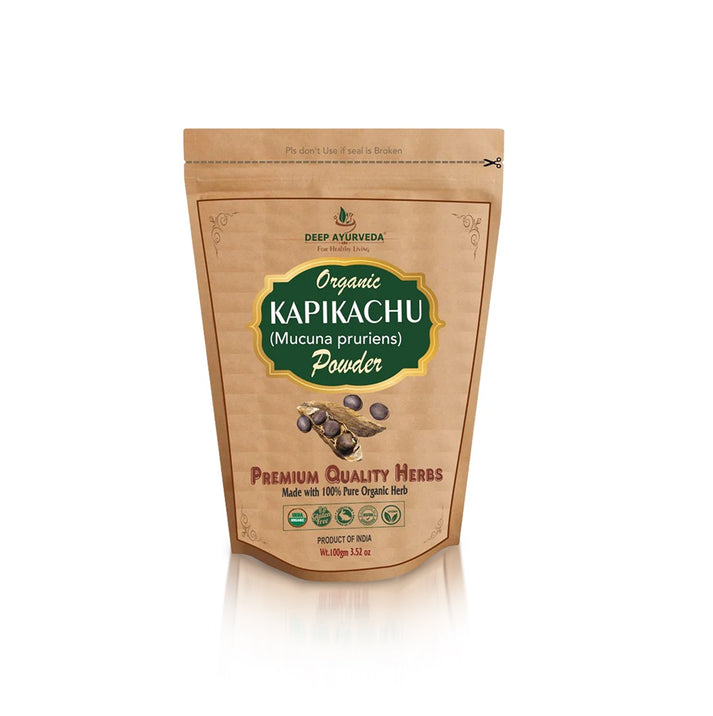
Deep Ayurveda Mucuna Pruriens Powder
✅ Supports Healthy Dopamine Levels ✅ Support Male Reproductive Health ✅ Supports Nervous System Function ✅ Support Energy and Vitality
Mucuna pruriens, also known as velvet bean, is a tropical plant seed that naturally contains L-DOPA, a compound involved in dopamine production in the brain. Because dopamine influences mood, motivation, and movement, Mucuna pruriens is often used in traditional medicine and modern supplements for general wellness support.
While early research suggests potential benefits for mood and neurological health, the scientific evidence in humans is still limited. It is not an approved treatment for any medical condition in Australia.
Like many herbal supplements, Mucuna pruriens may cause side effects and can interact with medications, especially those affecting the nervous system. It should be used cautiously and ideally under professional guidance.
What is Mucuna Pruriens?
Mucuna pruriens is a tropical legume plant native to parts of Africa, India, and Southeast Asia. It is commonly known as velvet bean due to the small hair-like fibers on its seed pods.
In traditional Ayurvedic medicine, Mucuna pruriens has been used for centuries as a rejuvenating herb believed to support vitality, energy, and neurological function.
Today, it is commonly found in capsule and powder supplement form, marketed as a natural source of L-DOPA.
Key Point
The most important compound in Mucuna pruriens is L-DOPA (levodopa), a direct precursor to dopamine.
How Mucuna Pruriens Works in the Body
To understand Mucuna pruriens, it helps to first understand dopamine. Dopamine is a neurotransmitter that plays an important role in mood regulation and emotional balance. It helps influence how we feel pleasure, satisfaction, and motivation in daily life.
It is also involved in motivation and reward, meaning it supports how the brain responds to goals, achievements, and positive reinforcement. Dopamine contributes to movement control, which is why it is often discussed in neurological conditions related to motor function.
It also affects focus and mental alertness, helping regulate attention and cognitive performance. Mucuna pruriens naturally contains L-DOPA, a compound that the body can convert into dopamine. This is the main reason it is studied in relation to brain chemistry.
In simple terms, the pathway can be understood as:
Mucuna pruriens → L-DOPA → Dopamine production in the brain
However, this does not mean it directly increases happiness or acts as a treatment for depression. The brain regulates dopamine very carefully, and external changes do not always lead to predictable effects.
From a scientific perspective, research suggests that Mucuna pruriens may influence dopamine-related pathways. However, how this translates into noticeable effects in healthy individuals is still not clearly understood and requires more human studies.
Potential Benefits of Mucuna Pruriens
This section summarises current scientific understanding. It is important to separate traditional use, early research, and confirmed clinical evidence.
1. Brain and Neurological Support
Mucuna pruriens contains L-DOPA, a compound that plays a key role in dopamine production in the brain. Because of this, it has been studied in neurological contexts, particularly Parkinson’s disease.
Research shows that L-DOPA from Mucuna pruriens may influence dopamine activity, but most evidence comes from clinical settings rather than general wellness use.
Evidence strength: ⚠️ Limited to Moderate (context-specific)
However, it is important to understand that Mucuna pruriens is not a substitute for medical treatment and is not approved in Australia for treating neurological conditions.
2 Mood and Motivation Support
Because dopamine is involved in motivation and emotional balance, Mucuna pruriens is sometimes used by people looking to support energy, focus, or general wellbeing.
Some small studies suggest it may have mild effects on mood-related outcomes, but the findings are inconsistent and not strong enough to draw firm conclusions.
In healthy individuals, the response can vary significantly, and benefits are not guaranteed.
3 Physical Performance and Energy
In traditional Ayurvedic medicine, Mucuna pruriens has long been used to support vitality, stamina, and physical energy.
While these traditional uses are well documented historically, modern scientific evidence is still limited and has not fully confirmed these effects in controlled human studies.
4 Male Fertility and Reproductive Health
Some early studies have explored Mucuna pruriens in relation to sperm quality and stress-related reproductive health factors.
Although initial findings appear promising in certain small studies, the overall evidence base is still limited.
More high-quality human research is needed before any strong conclusions can be made.
What the Science Actually Says
To understand Mucuna pruriens properly, it is important to look at the evidence in three different layers.
1 Human Studies
Human clinical trials on Mucuna pruriens are limited in number and mostly focus on Parkinson’s disease contexts.
Some studies show biochemical activity related to dopamine, but these findings cannot be directly applied to general supplement use in healthy individuals.
2 Animal and Laboratory Studies
Animal and lab research provides stronger evidence that Mucuna pruriens affects dopamine pathways in the body.
However, results from these studies do not always translate directly to humans, so they should be interpreted with caution.
3 Traditional Use
Mucuna pruriens has a long history of use in Ayurvedic medicine, where it is traditionally used for energy, vitality, and nervous system support.
While this traditional knowledge is valuable, it does not replace modern clinical evidence required for health claims.
Key Takeaway
Mucuna pruriens is biologically active and has measurable effects on dopamine pathways. However, the current scientific evidence is not strong enough to confirm clear health benefits for healthy individuals.
Most potential benefits remain early-stage, traditional, or context-specific rather than clinically proven for general use.
Safety, Side Effects, and Risks
Mucuna pruriens is a biologically active supplement due to its natural L-DOPA content. While some people use it for general wellness, it can also affect brain chemistry, which means side effects and precautions are important to understand.
Common Side Effects
Some people may experience mild nausea when taking Mucuna pruriens, especially on an empty stomach. This is one of the most commonly reported effects in supplement use.
Headaches have also been reported in some users, which may be related to changes in dopamine activity in the brain.
In certain cases, Mucuna pruriens may affect sleep patterns and lead to insomnia if taken later in the day.
A small number of users report dizziness or light-headedness, particularly when starting supplementation or using higher doses.
Digestive discomfort such as bloating or stomach upset may also occur in sensitive individuals.
Who Should Avoid Mucuna Pruriens?
People taking antidepressant medications should be cautious, especially MAOIs or SSRIs, as Mucuna pruriens may influence neurotransmitter levels.
It should also be avoided by individuals using Parkinson’s medications unless specifically directed by a healthcare professional.
Pregnant or breastfeeding women are generally advised to avoid Mucuna pruriens due to limited safety research in these groups.
People with psychiatric conditions involving dopamine sensitivity should use extra caution, as the supplement may affect mood regulation.
Those who are sensitive to stimulant-like supplements may also experience stronger side effects and should avoid or limit use.
Drug Interactions
Mucuna pruriens may interact with antidepressant medications, potentially altering how these medicines affect brain chemistry.
It may also interact with antipsychotic drugs, as both influence dopamine pathways in opposite ways.
Caution is advised when using dopaminergic medications, as combining them may increase effects beyond what is intended.
In some cases, it may also influence blood pressure medications, although research on this interaction is still limited.
Because of these possible interactions, it is always recommended to speak with a healthcare professional before using this supplement.
4 Long-Term Use Concerns
Since Mucuna pruriens directly influences dopamine pathways, long-term use may gradually affect how the brain regulates neurotransmitters.
Some individuals may develop tolerance over time, meaning they feel reduced effects with continued use.
Higher doses taken over long periods may also increase the likelihood of side effects, particularly those related to sleep and mood changes.
For this reason, long-term supplementation should be approached cautiously and ideally monitored by a qualified health professional.
Recommended Dosage
There is no officially established or medically approved dosage for Mucuna pruriens in Australia. Supplement use can vary widely depending on the product strength, L-DOPA concentration, and individual health factors.
Most supplements available on the market are standardised based on their L-DOPA content rather than the raw plant weight. This means the actual active compound can differ significantly between brands.
In general, lower-strength supplements typically provide around 100–200 mg of L-DOPA equivalent per day, which is often used by first-time users or those with lower tolerance. This range is usually considered more conservative, but individual response can still vary.
Some products may contain a moderate range of around 200–500 mg of L-DOPA equivalent per day, which is sometimes used in research or higher-strength formulations. However, this level may not be suitable for everyone, especially without professional guidance.
Because there is no universal medical guideline for general wellness use, the appropriate amount can differ from person to person. Factors such as body sensitivity, existing health conditions, and medication use can all influence how someone responds.
For safety reasons, it is always recommended to follow the instructions provided on the product label and avoid exceeding the suggested serving unless advised by a qualified healthcare professional.
Is Mucuna Pruriens Legal in Australia?
Mucuna pruriens is generally available in Australia as a herbal supplement. You can usually find it in capsule or powder form through health stores and online retailers.
However, it is important to understand that it is not registered as a therapeutic medicine for treating any disease. This means it is sold as a dietary supplement rather than a prescribed treatment.
In Australia, all supplements containing Mucuna pruriens must comply with the Therapeutic Goods Administration (TGA) rules. These regulations are designed to ensure products meet basic safety and quality standards.
That said, the quality of products can still vary between brands. Some supplements may contain different levels of L-DOPA depending on how they are manufactured and standardised.
When buying Mucuna pruriens in Australia, it is better to choose reputable brands that provide clear ingredient information. Products that offer third-party testing or quality certification are generally more reliable.
It is also advisable to avoid unregulated overseas products, as they may not meet Australian safety or labeling standards.
Mucuna Pruriens vs Other Natural Supplements
Understanding how Mucuna pruriens compares with other popular herbal supplements can help you make a more informed choice based on your health goals and expectations.
Mucuna Pruriens vs Ashwagandha
Mucuna pruriens works mainly through its natural L-DOPA content, which is linked to dopamine pathways in the brain and may influence motivation and mental energy.
Ashwagandha, on the other hand, is better known for helping the body manage stress by supporting cortisol balance and promoting a calmer response to daily pressure.
Mucuna Pruriens vs L-Tyrosine
Mucuna pruriens provides a direct source of L-DOPA, which is a more immediate precursor in the dopamine production pathway.
L-Tyrosine is an amino acid that supports dopamine production indirectly, so its effects are generally considered more gradual and mild.
Mucuna Pruriens vs Rhodiola Rosea
Mucuna pruriens primarily influences neurotransmitter activity, especially dopamine-related pathways involved in motivation and focus.
Rhodiola rosea is more commonly used as an adaptogen, meaning it helps the body cope with physical and mental stress over time rather than directly affecting dopamine.
Who Might Consider Mucuna Pruriens?
Mucuna pruriens is generally explored by people interested in natural wellness approaches, particularly those looking into traditional herbal supplements with modern biochemical interest.
It is often chosen by individuals who are curious about dopamine-related nutrition or who follow Ayurvedic or plant-based supplement routines.
However, it is important to understand that it is not essential for good health, and it should never be seen as a replacement for a balanced diet or medical treatment when needed.
Final Summary
Mucuna pruriens is a plant-based supplement known for its natural L-DOPA content and traditional use in Ayurvedic medicine. While early research suggests possible effects on dopamine pathways, the scientific evidence in humans is still limited.
In Australia, it is legally available as a supplement but should be used carefully due to its neurological activity and potential interactions with medications.
The most important takeaway is this:
👉 Mucuna pruriens is biologically active, but not a proven treatment for any condition.
Frequently Asked Questions
Is Mucuna Pruriens safe daily?
Daily use may not be suitable for everyone. Safety depends on dosage, health status, and medications.
Does Mucuna Pruriens increase dopamine?
It contains L-DOPA, which the body can convert into dopamine, but effects vary widely.
How long does it take to work?
Some people report short-term effects, but there is no consistent clinical timeline.
Can I take it with antidepressants?
This may be unsafe due to potential interactions. Always consult a doctor.
Is it legal in Australia?
Yes, as a supplement, but it is regulated under TGA guidelines.
Medical Disclaimer
This article is for informational purposes only and is not a substitute for professional medical advice, diagnosis, or treatment. Always consult a qualified healthcare provider before using any supplement.


